With a burgeoning population, Africa continues to grapple with unemployment. Kenya is no different. The unemployment rate among the youth, considered to be persons between the ages of 15 and 34, paints a grim picture at an astounding 67%. Expanding the scope to include women means fewer opportunities, with a comparatively higher unemployment rate. The statistics are less encouraging when considering marginalized, hardship rural settings in Arid and Semi-Arid Lands (ASALs) such as Narok, Samburu, Mandera, Turkana, and West Pokot counties. These persons can contribute to the nation’s workforce but are neither gainfully employed nor engaged in learning or training. The reality is that opportunities are exceedingly scarce and difficult to access.
So why are so many youths and women disproportionately affected by higher rates of unemployment in ASAL regions of Kenya?
There are several reasons for unemployment. One is a rapidly rising population that is not commensurate with the economic growth. Almost a million people graduate from high schools and tertiary institutions every year. They are thrust into a job market that is not only already saturated but also lacking in opportunities. In such hardship regions, the situation worsens since many more job seekers enter the labour market with little to no skills. The majority either fail to complete basic education or attain a mismatched skillset to naturally fit in their local labour market.
Additionally, such rural areas are prone to cultural biases, with the largest victims being women. For instance, most pastoral communities in ASAL regions have historically limited women’s access to education and property. Their accepted contribution to society was limited to caregiving responsibilities that neither attracted financial nor career rewards. While there has been considerable progress towards changing these perspectives, it is still a work in progress.
Furthermore, their heavy reliance on subsistent pastoral efforts and informal employment, which are seasonal and disproportionately vulnerable to climate shocks, renders their efforts unsustainable. While the national statistics paint a bright picture of digital penetration through cellular adoption and diffusion, ASAL rural settings are hampered by infrastructure and connectivity constraints. As a result, the youth and women in such areas are disproportionately disadvantaged when accessing available opportunities compared to their urban counterparts, who are more digitally exposed or connected.
Given these obstacles, the majority of youth and women in ASAL Kenya are forced en masse into the informal sector, where they take up low-paying and less stable jobs with few protections. Not to mention the chaos therein, given the lack of or total disregard of regulations. Those ambitious and lucky enough to pursue entrepreneurial endeavors face constraints like inadequate access to credit and mentorship, and difficulty in accessing markets, to mention a few.
What opportunities can we then leverage to turn things around?
- Scaling Access to Opportunities in the Digital Space
On average, 80% of Kenyans can access smartphone devices and internet connectivity. This creates a pathway to alleviating persistent unemployment and reducing poverty by leveraging digital penetration to strategically orchestrate sustainable success. The Kenyan government has made considerable efforts to explore digital space as a pathway to establish a virtual employment hub for over 600,000 youths through the Ajira Digital initiative. However, in most cases, these opportunities are limited to urban and peri-urban regions of non-marginalized counties. Moreover, the training module targets youth with a basic level of exposure within the digital space.
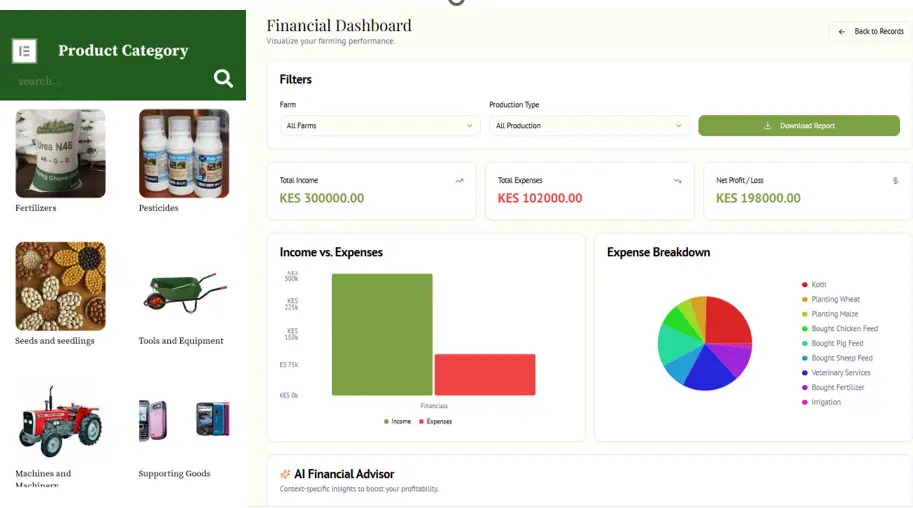
FOPCO Africa is already exploring opportunities to exploit scalable solutions like Ajira Digital in Narok County – a highly marginalized and ASAL county in the country. We seek to empower youths and women in the region by providing ICT infrastructures, developing tailored modules to the beneficiary needs, creating wide-scale awareness on organic digital opportunities like Ajira Digital, facilitating training, mentorship, and coaching on digital skills, business development, and financial management. We have mapped and engaged regional and international stakeholders to explore partnerships for the sustainable scalability of the intervention in other marginalized ASAL regions. FOPCO is also taking the initiative to support existing SMEs and agro-dealers in increasing their online presence and adopting digital solutions like FOPCO SHAMBA and FOPCOBiZ. These solutions help our beneficiaries to streamline their operations, grow their business, and improve their capacity as regional employers for local youth and women.
- Scaling access to funding
FOPCO Africa, in partnership with development partners, is already exploring impact-driven funding models to support entrepreneurial initiatives for youth and women groups within its key thematic areas of impact development – Public Health, WASH, Food and Nutrition Security, Education, and Adaptation-Based Environmental Sustainability Solutions. We are also working with the private sector and government departments to create opportunities for vulnerable groups in marginalized ASAL regions of Kenya to be enlisted and benefit from integrated empowerment funds like the Youth Enterprise Development Fund and the Women Enterprise Fund. We are creating awareness of existing funding opportunities, supporting indigenous youth and women in complying with regulatory needs, and navigating potential bottlenecks that restrict the majority from accessing such funds.
- Bridging the skill mismatch gap
The private sector has cited skill mismatch among Kenyan job seekers as one of the leading causes of poor absorption of fresh graduates into the job market. Most working-age youths and women are graduates of the 8-4-4 education system, which has since been abolished for a more competency-based curriculum. However, hundreds of thousands of jobless youths and women lack the skillset to competitively explore numerous local and international opportunities. FOPCO, in partnership with industry leads in food and beverage, pharmaceuticals, agrochemicals, and civil society organizations, continues to create internship and career mentorship opportunities for fresh graduate students from marginalized communities in Kenya. We support these graduates in developing a robust career growth strategy and help them access career coaching and mentorship from industry leads in their relevant fields of expertise. We also offer exchange programs and internship opportunities to these students to gain relevant expertise and skill sets to drive impactful change within their villages and communities at scale.
- Supporting sustainable agribusiness models for youth and women
In Kenya, 60–80% of employment opportunities available to citizens in any given county are linked to agriculture. In recent years, the Government of Kenya has directed significant efforts toward remodeling the agribusiness sector into a leading driver of job creation, to provide sustainable employment opportunities for the youth. The agribusiness sector has the potential to enable youths and women to employ themselves, as opposed to traditional farming practices that were primarily focused on subsistence provision. Unlike subsistence farming, which caters to personal needs and largely depends on the natural rain cycle, agribusiness combines innovative agricultural practices to achieve sustainable production. These efforts can be realized in ASAL regions by promoting smart farming practices and building infrastructure like irrigation channels, greenhouses, and facilities to support value addition.
FOPCO Africa has positioned its services at the center of supporting agribusiness initiatives by leveraging innovative and scalable digital platforms and tools to maximize sustainable impact in the communities we serve. We have developed an agribusiness digital platform, the FOPCO SHAMBA, which enables youths and women to make informed decisions in production, marketing, and managing business finances. This platform supports SMEs leveraging AI and IoT to produce crops using smart and precision farming practices. It helps them secure premium markets for their produce and records all their farming endeavors. It also allows beneficiaries access to an in-depth, AI-assisted analysis of their business financial health and delivers tailored recommendations for growing their profit margins. On the other hand, it also allows them to share learning experiences with their peers and seek expert support on diverse subjects. The best part is that farmers and SMEs can easily access written and audio content in their local languages, making it more inclusive and practical.
Conclusion
Kenyan youth and women in marginalized, ASAL counties are faced with persistent barriers to accessing dignified employment opportunities. While a daunting challenge, unemployment also presents unique opportunities to systematically reconsider tapping into inclusive, innovative, and sustainable solutions with immense potential in reshaping hundreds of thousands of livelihoods in these regions. By leveraging digital platforms, scaling access to funding, bridging the skill mismatch gap, and promoting sustainable agribusiness models, FOPCO Africa is demonstrating that with the right tools and partnerships, these marginalized communities can be effectively transformed from being disproportionately excluded to actively participating in and leading Kenya’s economic development. Systemic efforts to empower youths and women not only solve intermediate challenges to youth and women’s unemployment but also set communal investment into developing resilience, creativity, and prosperous sustainability pathways in motion. With scalable solutions, inclusive digital access, and targeted support systems, the journey from desperation to opportunity and self-reliance is not only possible but inevitable. FOPCO Africa is committed to ensuring this transformation is impactful and sustainable.